The point of departure
Y Eau de Parfum belongs to the part of perfumery that rewards attention rather than speed. Released by Yves Saint Laurent in 2018, it sits within the Aromatic Fougere family, but that label is only a useful doorway. The real experience is more gradual: an invitation to notice temperature, texture, distance, and the way a fragrance changes as the day moves around it.
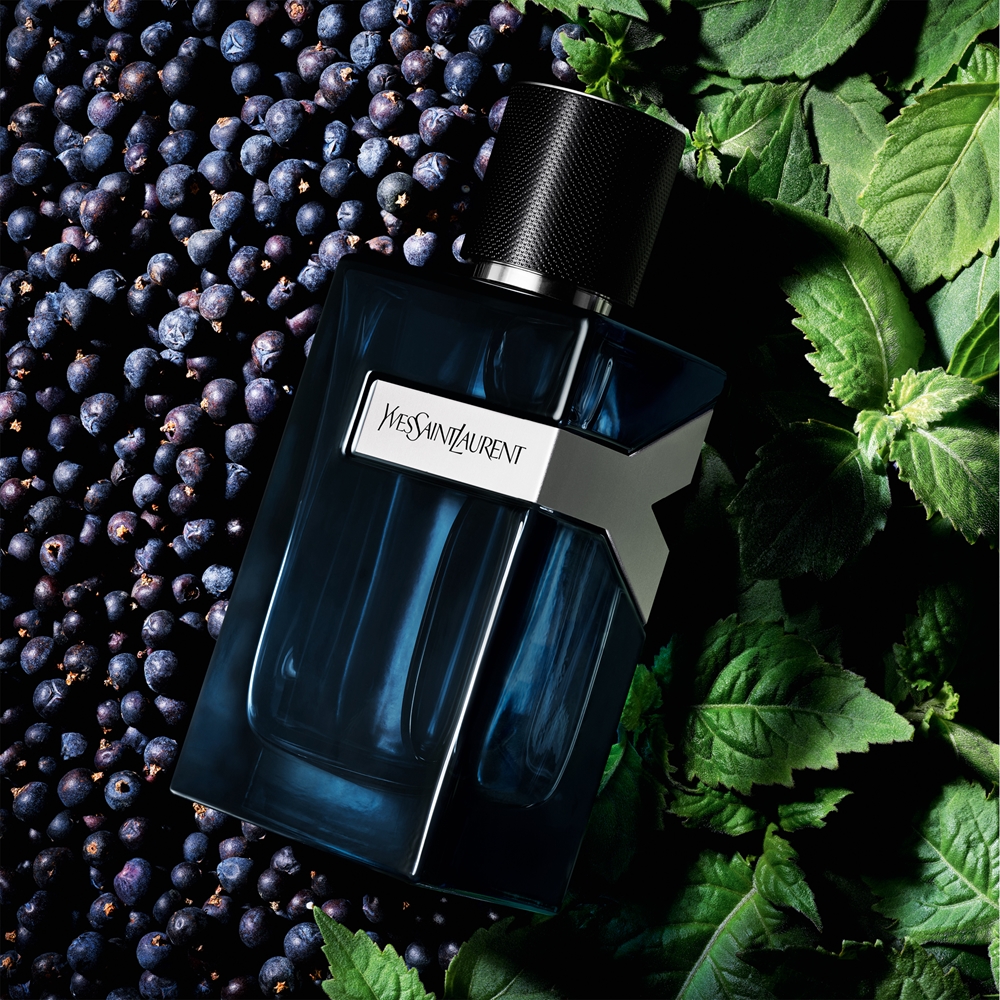
Formulated in 2018 by legendary master perfumer Dominique Ropion for Yves Saint Laurent, Y Eau de Parfum was engineered to capture the relentless drive, ambition, and creative passion of a modern generation of men who refuse to follow conventional rules. Ropion sought to bridge two seemingly contradictory worlds: the clean, uplifting energy of an everyday fresh cologne and the dense, magnetic sensuality of a high-performance night-out fragrance. Housed in a sharp, minimalist glass bottle sliced with a metallic Y emblem, the scent instantly established itself as a powerhouse of modern masculine perfumery, combining mass-appealing freshness with exceptional longevity and intense projection. The fragrance opens with a sharp, vibrant, and highly kinetic burst of crisp green apple, zesty fresh ginger, and bright bergamot. This high-contrast introduction immediately commands attention, offering an energetic and juicy freshness that feels intensely modern and invigorating. As the bright fruit and spice begin to settle, the heart introduces a clean, herbal-aromatic bridge built around aromatic sage, crisp juniper berries, and fresh geranium. This middle structure tempers the initial sweetness with a sophisticated, botanical masculinity, providing a structured transition into the deep, resinous foundation that defines the fragrance's ultimate character. The dry-down of Y Eau de Parfum reveals an intensely powerful, modern foundation dominated by dark amberwood, sweet tonka bean, dry cedar, earthy vetiver, and resinous olibanum. This rich, sweet-woody base yields an impressive longevity of nine to eleven hours coupled with strong, persistent sillage that easily cuts through crowded social venues and cooler evening air. Designed for high performance and exceptional crowd-pleasing appeal, it strikes an ideal balance between clean, shower-fresh brightness and rich, sweet, masculine sensuality. It remains a definitive modern classic for men seeking a reliable, high-impact signature that performs effortlessly across clubs, casual chic settings, and vibrant night-time adventures.
Its character feels especially considered for spring, autumn, summer and for moments such as clubbing, casual chic, night out. That does not make it prescriptive. Instead, those settings reveal the fragrance's natural rhythm, whether that means a cool morning, a tailored room, open air, or an evening when fabric holds onto every last trace.
Reading the opening
The first impression is shaped by apple, ginger, bergamot. These notes create the entrance, not the entire story. On skin, they may feel bright, dry, cool, or quietly aromatic before the composition begins to gather weight. What makes the opening compelling is the space between its ingredients: the pause after the first spray, the slight change in air, and the moment when a familiar material becomes more personal.
A thoughtful application is best made close to the skin and allowed to settle without rubbing. This preserves the first transition and makes it easier to understand why Y Eau de Parfum feels more dimensional than a single-note impression. The opening is a scene-setter, not a promise of exactly what will remain hours later.
Pay attention to the first five minutes separately from the next twenty. The difference between them is where the perfumer's craft becomes visible. In Y Eau de Parfum, the top notes are not merely decorative — they establish a tonal contrast that the heart will later resolve or complicate.
The heart in motion
At the center, sage, juniper berries, geranium give the fragrance its point of view. This is where structure becomes apparent. The heart can read as polished, floral, transparent, smoky, or softly textured depending on the wearer's skin and surroundings. In a well-built perfume, the middle does not simply replace the top; it carries small echoes forward and prepares the base without announcing the handoff.
That evolution is why fragrance is best experienced as a sequence rather than a score. Give this phase time. Notice what feels close to the skin and what moves outward into the room. Y Eau de Parfum has the kind of architecture that can be worn quietly, yet still leave a memorable impression when someone comes near.
The heart is also where Y Eau de Parfum reveals its relationship to the Aromatic Fougere family. If you have worn other fragrances in the same category, compare the weight and texture here. Some compositions use the heart to soften; others use it to deepen. Understanding which approach Yves Saint Laurent has taken will sharpen your ability to describe what you smell — not just in this perfume, but in any fragrance you encounter afterward.
The lasting impression
The base is built around amberwood, tonka bean, cedar, vetiver, olibanum, the materials that give the composition its final contour. They create the tactile part of the experience: the soft warmth of fabric, the polished feeling of wood, the mineral air of a room after dusk, or the gentle sweetness that remains on a cuff. This is also where personal chemistry matters most, so a paper strip can suggest direction but cannot replace a skin test.
With an expected longevity of 9-11 hours and a strong and persistent trail, the fragrance has a clear presence without needing to be over-applied. Two or three measured sprays are a more useful starting point than chasing maximum volume. The goal is a halo that feels intentional, not a cloud that arrives before the wearer does.
The dry-down is the most honest part of any fragrance. It is what you are left with when the marketing has faded and the top notes have evaporated. For Y Eau de Parfum, this final stage is where the composition's real value becomes clear: a base that does not simply persist but evolves, becoming warmer, rounder, or more complex as it interacts with body heat and fabric throughout the day.
How to wear it well
For Y Eau de Parfum, restraint makes the composition more legible. Apply to warm pulse points, then let the perfume travel naturally through movement. On clothing, one light mist from a distance can extend the atmosphere, although delicate materials should always be treated carefully. In warmer weather, reduce the amount and favor open air; in cooler weather, fabric and knitwear can reveal a deeper, slower reading.
The fragrance is most persuasive when it belongs to a complete mood. Pair it with clean textures, a calm pace, and enough room for the dry-down to arrive. It can accompany clubbing, casual chic, night out, but it is equally suited to the private rituals that rarely make a calendar: a late walk, a desk by a window, a coat hung in the hallway.
Consider the gap between application and arrival. If you apply Y Eau de Parfum twenty minutes before leaving, the people you meet will encounter the heart and base rather than the opening — often a more rewarding introduction. This is not a rule but a habit worth experimenting with, especially for fragrances with a complex top-to-base transition like this one.
Materials and context
Understanding apple, ginger, bergamot, sage, juniper berries, geranium, and amberwood, tonka bean, cedar, vetiver, olibanum as individual materials helps you see why Y Eau de Parfum works — and gives you a language for comparing it to other fragrances. Each note contributes not just a smell but a property: brightness, warmth, depth, transparency, or weight. The perfumer's skill is in balancing these properties so that no single element overwhelms the others.
The Aromatic Fougere classification tells you something about the composition's structure, but it does not predict how it will feel. Two fragrances in the same family can be as different as two rooms with the same floor plan. What matters is the execution: the quality of raw materials, the proportions, and the way the transitions are handled. Yves Saint Laurent has a specific approach to these decisions, and Y Eau de Parfum is a useful reference point for understanding it.
If you are building a small wardrobe of fragrances, consider where Y Eau de Parfum sits relative to what you already own. Does it fill a gap in your seasonal rotation? Does it offer a texture or mood that your other fragrances do not? A collection is more interesting when each piece earns its place through contrast rather than redundancy.
Why it remains worth knowing
Yves Saint Laurent's 2018 release remains relevant because it offers more than immediate prettiness. It gives the wearer a vocabulary for materials and contrast: apple, ginger, bergamot meeting sage, juniper berries, geranium, then settling into amberwood, tonka bean, cedar, vetiver, olibanum. That progression makes it valuable for both a new enthusiast learning how fragrance families work and a collector looking for a composition with a distinct emotional register.
Our view is simple: sample it slowly, record your impression after fifteen minutes, then revisit it after several hours. The most meaningful part of Y Eau de Parfum may not be the first spray, but the detail that returns later when you are no longer actively looking for it. That is the quiet measure of a memorable perfume.
Fragrance writing at its best does not tell you what to think. It gives you a framework so that your own experience becomes richer and more precise. Whether Y Eau de Parfum becomes a signature, a reference point, or simply a fragrance you are glad to have understood, the time spent with it is never wasted. That is the standard we try to meet with every profile in this journal.