History
A century
in scent.
From the first abstract perfume in 1921 to the niche independents of today, the story of modern perfumery is a story of chemistry, culture, and craft. This timeline traces the eras that defined it.
The birth of modern perfumery
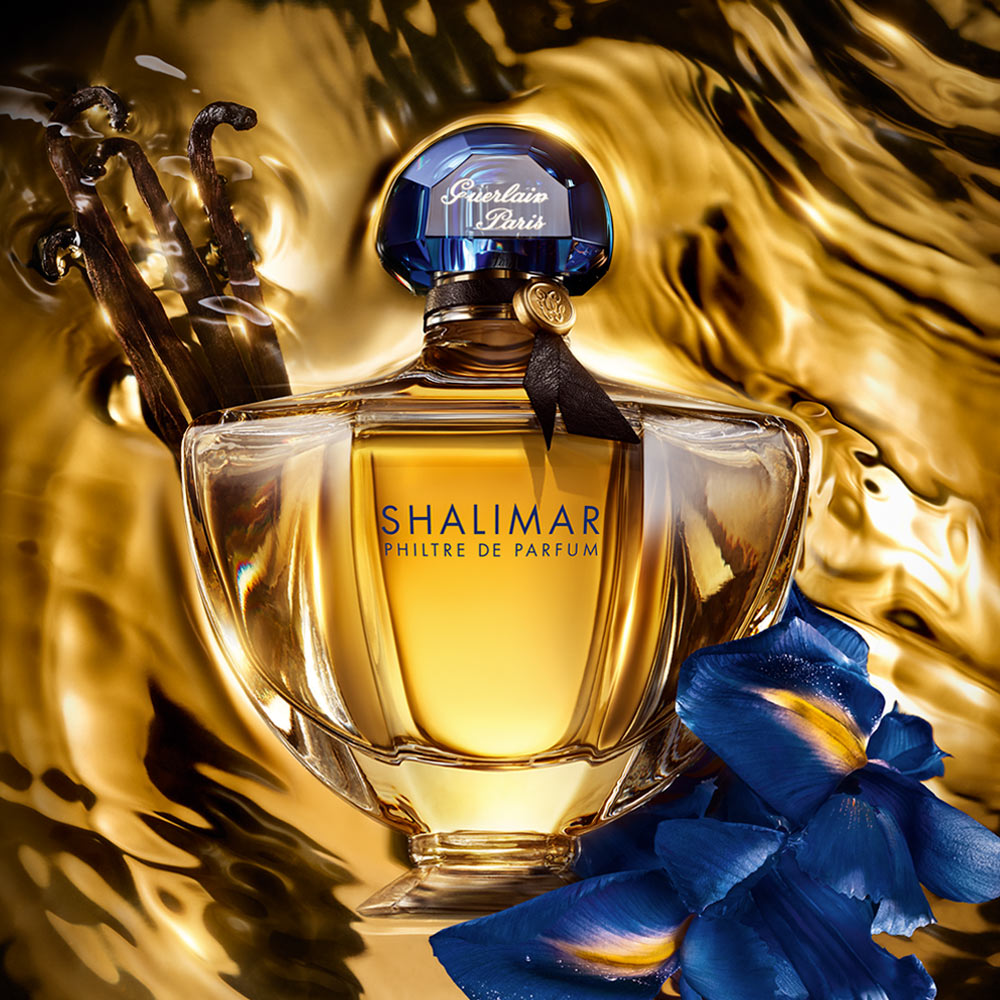
The post-World War I era saw a revolution in fragrance. In 1921, Chanel No. 5 introduced the concept of an abstract perfume — one that did not attempt to imitate a single flower. Jacques Guerlain answered in 1925 with Shalimar, the first great oriental, blending synthetic vanillin with natural resins to create a new olfactory language.
Aldehydes, leather, and restraint
The interwar period expanded the palette. Aldehydic florals became a signature of high luxury, while leather compositions drew on the smoky, animalic traditions of Spanish glovemakers. The Second World War narrowed production, but the formulations that survived became reference points for decades.
The golden age of chypre and fougère
Post-war optimism brought fresh structure. Chypre fragrances — built on the contrast between bergamot and oakmoss — defined feminine elegance, while fougère compositions, centred on lavender and coumarin, became the backbone of masculine perfumery. The era prized balance and architecture over raw impact.
Opulence and the power scent
The late twentieth century favoured boldness. Rich orientals, heavy musks, and animalic bases dominated. Yves Saint Laurent's Opium (1977) and Giorgio Beverly Hills (1981) exemplified a culture of excess. Fragrance became a statement of presence — loud, confident, and unmistakable.
Transparency and the aquatic revolution
A counter-movement arrived. Calvin Klein's CK One (1994) collapsed gender boundaries, while Acqua di Giò (1996) introduced a marine, transparent aesthetic that rejected the heaviness of the previous decade. Clean musks and ozonic notes defined a new minimalism.
The niche awakening
As mainstream fragrances became increasingly market-tested and safe, a new category emerged: niche perfumery. Houses like Creed, Serge Lutens, and Frédéric Malle offered compositions that prioritised artistic vision over mass appeal. Aoud, incense, and unusual naturals entered the conversation.
Oud, gourmand, and the luxury boom
Oud became the dominant note of the decade, crossing from Middle Eastern tradition into global luxury. Gourmand compositions — fragrances built on vanilla, chocolate, and sweet resins — moved from novelty to staple. The line between niche and mainstream blurred as designer houses launched their own "luxury" lines.
Sustainability and the new independents
The current era is shaped by two forces: a demand for transparency in sourcing and sustainability, and a wave of independent perfumer-artists working outside the traditional house system. Parfums de Marly, Maison Francis Kurkdjian, and a growing list of micro-brands are redefining what luxury fragrance means — one composition at a time.
From the collection